Tips on lowering your costs and increasing profit in the new year
By Nancy Wood
In the face of ongoing challenges, restaurant owners and operators are continuing their uphill battle to recover from the toll the pandemic took. The industry has always born the brunt of slim profit margins, employee turnover, cost of goods and operational expenses. But in the current climate of rising food costs, supply chain issues and labor shortages, finding ways to lower costs and increase profits has become critical.
Restaurateurs are quickly adapting to the post-pandemic “new normal” in an effort to sustain and grow their businesses by making changes in every facet of operations – from devising new ways to lower food costs and getting ahead of supply chain issues to focusing on employee retention and implementing cost-saving technology. All while maintaining a brand experience that will keep customers coming back.
Lowering Food Costs
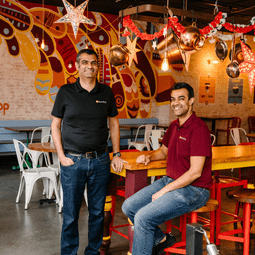
The rising cost of food as a percentage of sales has had a direct impact on every restaurant’s bottom line. But how can you solve for that? Brothers Neal and Samir Idnani, who own and operate three NaanStop locations in Atlanta, have implemented several strategies to address the issue, starting with menu modifications.
“About a year-and-a-half ago, when chicken prices really went through the roof,” says Neal, who serves as CEO of the Indian fast-casual concept, “it became clear to us that we had to start making some modifications. Our chicken tika masala is our No. 1 seller,” he says, “and the price of chicken had gone up from $50 a case before the pandemic to over $120 a case in the summer of 2021 into 2022. That became very untenable for us.”
Although they did implement some modest price increases, taking their No. 1 seller off the menu wasn’t an option.
“We did change our menu mix so that there were other items on the menu that we could sell at a 10% food cost, where we could sell chicken tika masala at a 30% food cost, but on balance we can keep our costs in line,” says Samir Idnani, Naanstop’s CFO and COO. By deleting dishes with a higher food cost, they could focus on dishes with lower costs, like their popular Punjabi Dal, a dish made with stewed lentils.
As chicken prices have started to decline, they can now add back other items that use more expensive produce like spinach and position them as limited-time offers. “Shifting the timing of our LTOs helps absorb some of the shock of food prices,” says Neal.
For Sean Yeremyan, who with wife, Becky, owns Big Table Restaurants, which includes four Hobnob tavern locations and Cattle Shed Wine & Steak Bar, his mantra is “buy smarter.”
“You can make money when you buy smarter,” says the long-time restaurateur.
Two things happen when you buy smart, says Yeremeyan – especially when you’re a growing company. “You can take advantage of your buying power and special buying and increase profitability, and also offer better prices for your customers because you bought so low,” he says.
Since the most popular item at Hobnob is its burgers, Yeremeyan says, “Just because beef is too expensive, you’re not going to not sell burgers. You may not want to have nine burgers. Maybe you have five because the beef is expensive, but at the same time you don’t want to lose your identity either.”
“We’ve always stuck to a very core limited menu, and in this environment, that can be difficult,” says Chris Smith, co-founder of the South African-inspired quick-service restaurant Zunzi’s and Zunzibar, his larger bar-led concept. “When you are only offering a few items, if one of those items goes drastically up it can be problematic.”
For Zunzi’s, the sandwich-focused concept, Smith says one change they’ve made is to offer multiple sandwich sizes. “We’ve also introduced wings, which had a very big spike during COVID-19. In talking to our vendors, there was an expectation going into the second half of 2022 that they would drop. So we rolled out wings, and those prices have come down around 60% or 70%.”
The Value of Vendors
Having good relationships with vendors has always been important in running a successful restaurant, but lingering supply chain issues has resulted in some restaurateurs taking a hard look at their suppliers. For the Idnani brothers, keeping a close eye on inventory and broadening their vendor list for NaanStop has helped when it comes to the bottom line.
“One way we’ve been able to lower our costs is to keep large inventories on items that are either difficult to get. Or when we’re able to get them at an advantageous cost, we just stock up,” says Neal. By flagging certain shelf-stable products, he says they can keep a couple of month’s stock as insurance against supply chain hiccups.
For their concept, this can be particularly tricky since many supplies come on container ships directly from India. “When the whole supply chain snarled, for a while we couldn’t get basmati rice – brown rice – a staple of Indian cuisine,” recalls Samir. Adds Neal, “We went to every Indian grocery store in town and bought all the Indian basmati rice they had.”
“We had 400 pounds of raw brown rice in the back of Neal’s car,” says Samir, laughing at the memory.
“We also added Instacart into our mix of the vendors,” says Neal. While they still order weekly from their main suppliers, they also place orders for things that are cheaper at a grocery store or Restaurant Depot. “We have a short list of items that are cheaper at Restaurant Depot, even if I pay for delivery from Instacart,” he says.
“If you can save yourself a $100 a week,” says Samir, “that saves a lot of money on the year.”
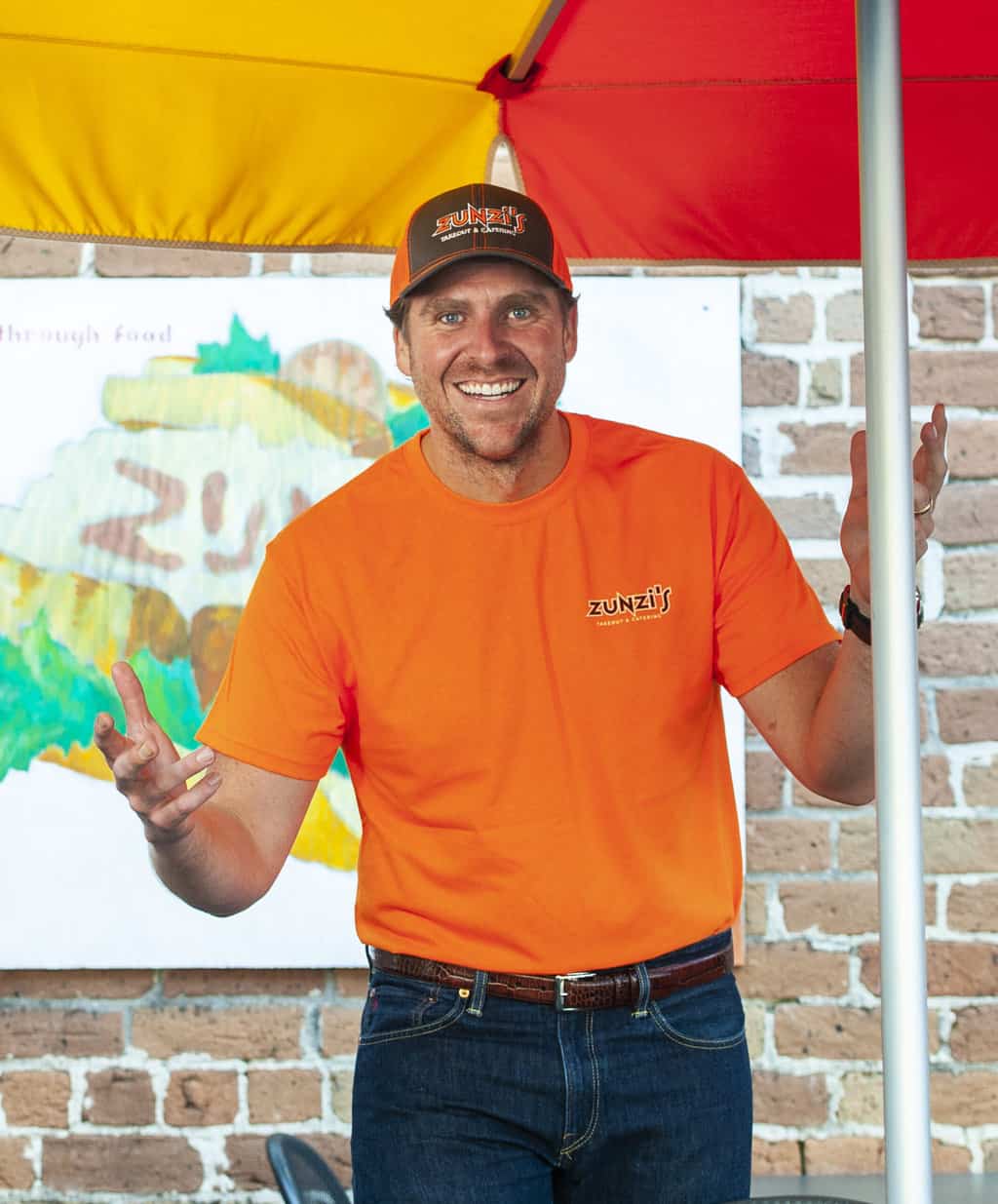
Another way to lower costs is negotiating with suppliers. “Even though we’re small,” says Zunzi and Zunzibar’s Chris Smith, “we’re an emerging chain, and we put together master distribution agreements (MDA) with our primary supplier U.S. Foods with locked-in set margins.” The result is that regardless of what is happening in the marketplace, Smith says they don’t have to worry about pricing.
While he does use some local vendors when supply chain issues occur, Smith says “Vendors are a huge part of our success, and it really showed during COVID. So we want to have a great relationship – as large a relationship as we can have with as few a number of vendors.”
Becky Yeremyan, who manages the supply chain operation for Big Table Restaurants, agrees that forming great supplier relationships is important. “You want to establish those relationships with partners who want to grow with you,” she says.
While the company keeps additional vendors in their supply rotation, Yeremyan says, “We’ve found that it’s best to aggregate volume and develop supply programs with one main vendor that agrees to hold margins throughout the supply agreements and also agrees to rebates based on volumes of purchases.”
The right software also helps in managing supply chain issues. Big Table Restaurants uses a system called Orderly that Becky Yeremyan says, “allows us to run menu costing reports that identify menu items that no longer meet profit margin thresholds.” The group also uses a program called Foodbam that she says “allows us to compare weekly pricing across vendors to assure we are buying the cheapest item weekly.”
Chris Smith takes advantage of the Toast POS and management system to keep an eye on costs. “With Toast,” he says, “we use Xtrachef, and that is our cost of goods management tool. We’re able to see price alerts, manage all of our inventory, our cost of goods and have a controllable P&L.” The system allows Smith to get an accurate cost of goods on a weekly basis and be proactive. “With the amount of volatility in the supply chain, it gives us more time to plan.”
Tackling the Labor Shortage
The on-going labor shortage has sent owners and operators into full-scale reassessment – not just by increasing wages, but also offering health benefits and providing more flexible scheduling, child care options and even rideshares for employees who may have long commutes on public transportation.
Another important strategy is centered around creating the type of environment that supports the brand and instills more employee loyalty. And many restaurateurs are going further by implementing more technology and new equipment that actually reduces staffing needs.
“The labor market is tight,” says Naanstop’s Neal Idnani, “but it’s not like it was 12 or 18 months ago. We’re having to be a lot more aggressive about our search and our compensation.” Some specific operational changes include Naanstop offering a four-day work week for some managers, accommodating students’ schedules and employees with child care needs, as well as covering transportation using Uber to cut transit time.
“We’ve been able to find some efficiency with equipment, with consolidating work, and with training so we can reduce the total amount of time that people have to spend, especially on more repetitive tasks,” he says.
The Idnani brothers has also put a lot of thought into their employee value proposition. “Why should somebody want to work at Naanstop? It’s more than just a paycheck – it’s what we can offer in terms of a great quality of life, he adds. “That’s helped with retention, and it’s a massive cost savings.”
For the 160-seat Zunzibar location in Savannah, Chris Smith has implemented a model that – as he puts it – “takes the best of a fast-casual QSR model, married with the best practices of a full-service bar, and then we combined the two by layering technology,” he says. “We look at leveraging technology as a way not necessarily to cut costs, but as a way to elevate what our team is focused on to create a better experience for the guest.”
To that end, guests can order three different ways – at a kiosk, order and pay at the table using a QR code, or order from a server who is using a handheld tablet. “From a labor standpoint, we would normally operate with six to eight servers, a manager and one to two bartenders,” he says. “We are now able to operate on a busy day at full capacity with three servers, one manager and one to two bartenders depending on the day. So we’ve been able to cut our servers in half.”
While this approach isn’t strictly a labor-saving device, what it does do is allow Smith to provide service on those days when servers are scheduled and don’t show up. “It gives us the ability to change our service model based off of the labor that we have that day,” he says.
Smith also implemented a split tip pool that is shared among all of the hourly employees for the hours worked, including the kitchen staff. “With this model and being able to shrink the number of servers that are required to operate, we were able to create a new labor model where our average employee is making around $20 an hour.”
Catering and Private Events
Statistics from the National Restaurant Association reveal that 16% fewer people are dining on-premise compared to before the pandemic. That’s matched by a 16% increase in people dining off-premise. And both delivery and drive-thru numbers are up.
With off-premise dining and catering coming back in a big way this year, owners and operators with catering operations are seeing a bigger impact on the bottom line.
For Sean Yeremyan, catering has always been central to his business model. While profits may run 15% in the restaurant business, he says, “When you talk about catering that comes out of the restaurant, you’re talking about 35%. You don’t have to pay the rent, you don’t have to pay additional power bills, you don’t have to do a lot of things. Whether you have catering or not, you’re paying those bills, so it does matter for us.”
“When anything else falls off, you’ve always got catering,” says Smith. “We’ve always been a take-out, delivery, catering restaurant.” In fact, catering had become almost half of his business at the Zunzi location in Atlanta pre-COVID. “Catering had gotten so big, it was the tail wagging the dog operationally.”
Smith says the down period during the pandemic allowed his team to focus on their in-store operation. “We’ve increased our store sales in the Atlanta location, so our target for catering now is about 30%.”
“We’re happy to see that catering has come back really, really strongly in 2022,” says Naanstop’s Neal Idnani. “And we were also able to retool our catering packages to have better costs and to provide better value to the guests.”
“Before the pandemic, catering was approximately 20% to 25% of our sales,” adds Samir. “And in November, we were running about 33% to 35% of sales.”
Another effort to bolster the bottom line is to supplement catering with private events. Even if there are no designated private rooms in an operation, full restaurant buy-outs or bar buy-outs can make a difference. Yeremyan is able to offer both with his two concepts. At Cattle Shed, there is a small private dining room on the second floor, while at the Hobnob neighborhood taverns, some have private dining, some don’t. “The ones that don’t have private rooms have bar buy-outs, and we also have a catering event director who particularly works on selling out those rooms or locations,” he says.
Private events also come into play at Zunzibar. “We supplement catering in that model with private events and renting out the space,” Smith says. “We prefer that Zunzibar be known as a great bar first and a great experience, so we want to keep our team inside those four walls for that. Private events allow you to do that.”

Loyalty Card Programs
Keeping guests coming back for more is another good way to build a brand and impact the bottom line. As inflation begins to take a toll on customer pocketbooks, loyalty card programs can also help with offers of special pricing, free food or beverages and other perks.
For QSR concepts like Naanstop, having a robust loyalty program is an important part of its business. “We revamped our program to encourage more loyalty and get more repeat business,” says Neal.
“We also have trained our staff better on upselling,” adds Samir. “People can add a dessert or add drinks to their order who are part of the loyalty program and sample them for free as a reward.”
That, he adds, encourages guests to buy those desserts or drinks on a different day even when thy don’t have a loyalty reward. “Overall,” he says, “we’ve been able to increase our check average 35% or 40%.”
Sean Yeremeyan started the Hobnob loyalty program a few years ago. Since the concept is known as a neighborhood tavern, his approach is to offer people “a third home.”
“To create repeat business, that is one of the first things that comes to business people’s minds,” he says. “I want them to come three, four, five times a week.” By offering incentives that creates regulars, the idea is “the more you come, the more you save.”
While Yeremeyan says the loyalty card program hasn’t made as much of a difference to the bottom line as one would think, it does increase business. “It’s part of the marketing plan,” he says. “It’s going to be one of the ways you increase and sustain the business – and it’s more important as the economy gets worse.”
How the economy fares in 2023 remains to be seen, but by finding a balance between increasing profits and lowering costs, you can find a way to navigate through this year and emerge a stronger business for it.
Ideas for Increasing Profits
- Consider menu adjustments and reconsider ingredients to reduce food costs
- Investigate methods to minimize food waste
- Optimize the number of suppliers and build relationships with them
- Learn to negotiate advantageous agreements and rebate programs
- Consider local sourcing options
- Use cash-back credit cards
- Implement software to track cost of goods and inventory
- Compare pricing for non-food items, like paper products and vinyl gloves
- Look for potential savings on utilities (energy efficient appliances, light bulbs, low-flow toilets and faucets)
- Offer catering services
- Start a loyalty program to grow repeat business
- Create employee retention plans (flexible scheduling, childcare considerations)
- Cross-train employees
Read More
Good Impressions: How to Simplify Restaurant Openings
How Can I Find the Right Employee in Today’s Market?



