By Ellen Weaver Hartman
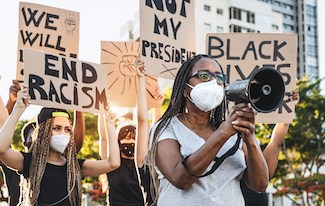 Many restaurant owners had been reeling from managing the Covid-19 crisis, trying to keep their restaurants open and their employees and guests safe. Then, on May 25, George Floyd was killed by a police officer. His death, along with the deaths of Ahmaud Arbery, Breonna Taylor, Rayshard Brooks and others, sparked civil unrest and demands for justice, racial equality and equal opportunity across the country.
Many companies large and small are now being held to task – how are they going to enact real change and create a culture of diversity, inclusivity, and opportunity, especially for Black people but also Indigenous and People Of Color (BIPOC)? Silence is no longer an option. Many CEOs posted publicly their company’s support of the Black Lives Matter movement, but those statements of support must be backed up with concrete efforts to enact real change within their companies.
How should restaurant companies react? Denny’s is one example of a company that has put its money where its mouth is. Denny’s has a top executive for diversity who works with CEO John Miller and other senior leaders to make sure their actions have transformed Black lives and have made the company a better place to work or dine for all.
The company’s commitment is wholistic and woven throughout everything it does, including having a diverse board of directors, company-wide ownership and accountability that is monitored and measured, training for all employees, clear enforcement of non-discrimination policies, supplier diversity and engagement, and local and national sponsorships with scholarships for Black and Hispanic students, NAACP’s Youth Achievement program, National Urban League, Multicultural Foodservice & Hospitality Alliance (MFHA), and the Asian Women in Business among many others. Its extensive workforce and education training includes inclusivity training, and its marketing reflects its values as well.
In the late 1990s, AFC Enterprises, parent company to Popeyes, Church’s, Cinnabon and Seattle’s Best Coffee, was an early proponent of DEI initiatives, creating a diversity management program called New Age of Opportunity led by CEO Frank Belatti. The program recruited, trained, and assisted minority employees, franchisees and suppliers. It was created by senior management in an effort to right the wrongs of discrimination and level the playing field for people of color and women. As with Denny’s, its program was successful because of the leadership and commitment by the CEOs.
AFC began with a commitment to build 300 Habitat for Humanity homes in communities where they were opening or had existing restaurants with the strategy that AFC would invest into the communities and work side by side with local leaders to build the homes. AFC also included two Black-owned investment banking firms in its IPO, including former Atlanta Mayor Maynard Jackson’s banking firm. It strategically hired for key positions, with 42% of its top paid officers being minorities and women. Its board included several Black and women leaders, and the company created from scratch a minority supplier program and increased its annual spend by $6 million in one year. Strategic volunteer service and sponsorships were a priority: Frank Belatti volunteered and served as chairman of the board for the Atlanta Urban League and was the co-chair, along with Nelson Mandela, of the NAACP’s membership drive.
You may not be a company that can invest $1 million to support the cause, but every company can implement the following actions and really make a difference. The following ideas can get you started. These best practices came from my experience as vice president of communications and diversity for AFC Enterprises and from serving on industry boards and a diversity roundtable with diversity leaders from Delta, ATT, Southern Co., and The Atlanta Journal-Constitution.
Open the Conversation and Get Uncomfortable
The MFHA is holding a series of virtual town hall meetings about racism in America and how it affects the restaurant industry. I would encourage you to virtually attend. You can find them at https://mfha.net/virtual-town-hall-series.
At one of its most recent town halls, successful Black franchisees from Pizza Hut, McDonald’s and other major restaurant chains echoed those sentiments. You need to reach out to your Black franchisees and employees to check on them and listen. Do they feel safe? How are they doing? What changes do they want?
Begin the uncomfortable conversations. For starters, ask about The Conversation that all Black parents have with their children about what to do if you are stopped by the police.
Seek to Understand
Take time to read and review the history of racism in our country over the past 200 years. Do what Stephen Covey, in his book The 7 Habits of Highly Effective People, recommends, “Seek first to understand.” Even in current times, there are policies and unspoken ways that people of color are held back. A good place to start is to read and review the Smithsonian Magazine’s Understanding Racism in America at smithsonianmag.com, or watch Uncomfortable Conversations with a Black Man by former NFL player and Fox Sports analyst Emmanuel Acho on YouTube.
Advocacy
Use your power in the industry at the local, state and federal level in Washington, D.C., to advocate for policies to protect and provide equal access for Black people with policy makers. Support Black people’s right to have a voice in your power circles.
Representation
Every organization needs to have diversity at all levels, including in the C-suite. And you cannot have only one person from an underrepresented group in a leadership role. That’s a sign of tokenism, in which recruiting the person to a position is a perfunctory or symbolic effort to give the appearance of equality within a workforce without being truly inclusive. That one person will feel like the outsider rather than part of the team and will be the lone voice when it comes to speaking on the work and life experiences of people of color. You need a collection of diverse voices in your organization at all levels.
Unconscious Bias Training
Unconscious bias training programs are designed to expose people to their unconscious biases, provide tools to adjust automatic patterns of thinking and ultimately eliminate discriminatory behaviors. A critical component of unconscious bias training is creating awareness for implicit bias. These sessions will benefit others who are marginalized.
Community Service
Consider what local organizations your company is supporting, both through money and time. Encourage your employees to have a say and provide opportunities to volunteer with organizations that support Black and other minority causes. And be sure to give all of your employees time off to go vote.
Hire Black Suppliers
Not only is hiring Black Americans important, but supporting Black businesses is as well. There are plenty of Black-owned suppliers and services that you can partner with, and it is your responsibility to do the work and make it happen.
This is only a partial list of actions you can take to make a meaningful difference. For more information about how to effectively engage with your employees and guests, contact MFHA at mfha.net and info@mfha.net. Restaurant Informer and I welcome your input. Let’s get this conversation started!
Ellen Weaver Hartman, APR, Fellow PRSA, is the CEO of Hartman Public Relations, a full-service public relations and crisis management agency specializing in the foodservice industry. Hartman has experience working for global food and beverage companies in QSR, full service, fast casual, convenience stores and airport concessionaires. An industry leader for more than 30 years, Hartman served as vice president for communications and diversity at AFC Enterprises. She has helped restaurant clients through a variety of crisis situations including contagious diseases (COVID-19, Norovirus, Hepatitis A), violence in the workplace, sexual and racial discrimination, cybercrimes, criminal activities in the company and environmental disasters. She is active in the Women’s Foodservice Forum, Les Dames d ’Escoffier International and serves on the board of the Georgia State University School of Hospitality. She earned her APR accreditation from the Public Relations Society of America and is a member of PRSA’s Fellow program for senior accomplished professionals.



